Best Monitor for Video Editing 2026: Color Accuracy Guide
Professional monitors for editors, colorists, and content creators
Recommended Products
Based on our research, here are some top picks:
LG 32GN650-B Ultragear Gaming Monitor -

$359.99 on Amazon
ASUS ROG Swift OLED 27" Gaming Monitor -

$798.77 on Amazon
Samsung Odyssey G55C Gaming Monitor -

$214.99 on Amazon
Dell UltraSharp U2723QE 4K Monitor -

$659.00 on Amazon
As an Amazon Associate, we earn from qualifying purchases.
Quick Navigation
What Matters for Video Editing Monitors
Video editing demands accurate color reproduction and sufficient resolution to view your footage properly. Here's what to prioritize:
Critical Features
-
1.
Color Accuracy (Delta E < 2)
Delta E measures color deviation. <2 is imperceptible to human eyes. Factory-calibrated monitors with low Delta E ensure what you see is accurate.
-
2.
Color Gamut Coverage
100% sRGB minimum. 95%+ DCI-P3 for professional/HDR work. Wider gamuts display more colors.
-
3.
Resolution (4K for 4K editing)
View native 4K footage without downscaling. More pixels also means more room for timeline/panels.
Important Features
-
4.
Panel Type (IPS or OLED)
IPS for accurate colors at all angles. OLED for perfect blacks and HDR. Avoid TN panels.
-
5.
10-bit Color Support
1.07 billion colors vs 16.7 million. Smoother gradients, essential for color grading.
-
6.
HDR (for HDR content)
Only needed if editing HDR footage. Requires high peak brightness (1000+ nits).
For YouTube/Social Media: A good 4K IPS monitor with 100% sRGB is sufficient. You don't need expensive reference monitors unless doing broadcast or cinema work.
Best Video Editing Monitors 2026
ASUS ProArt PA32UCG-K
Resolution: 3840x2160 (4K)
Size: 32 inches
Panel: Mini LED IPS
Color: 98% DCI-P3, 10-bit
HDR: 1600 nits peak, 1152 zones
Price: $3,500-4,000
The ultimate video editing monitor. Mini LED backlight with 1152 dimming zones delivers true HDR with 1600 nits peak brightness. Hardware calibration support, Calman/LightSpace certified. Thunderbolt 3 connectivity. Built-in colorimeter for self-calibration. The professional choice for colorists and post-production studios.

$2,748.99 on Amazon
BenQ SW272U
Resolution: 3840x2160 (4K)
Size: 27 inches
Panel: IPS
Color: 98% DCI-P3, 99% Adobe RGB
Delta E: <2 factory calibrated
Price: $1,300-1,500
BenQ's flagship for photo and video. Factory calibrated with individual calibration report. Hardware calibration with Palette Master Element. Shading hood included. USB-C with 90W PD. Excellent for both photography and video editing workflows.

$1,499.99 on Amazon
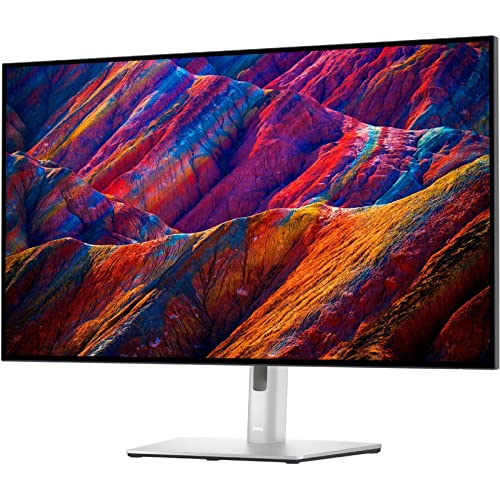
Dell UltraSharp U3223QE
Resolution: 3840x2160 (4K)
Size: 32 inches
Panel: IPS Black (2000:1)
Color: 98% DCI-P3, 100% sRGB
USB-C: 90W Power Delivery
Price: $900-1,000
The sweet spot for YouTube creators and freelance editors. IPS Black technology delivers 2000:1 contrast - significantly better than standard IPS. Factory calibrated for accuracy. USB-C hub with 90W charging and KVM switch. Excellent for those who need professional quality without reference monitor pricing.
$819.00 on Amazon
ASUS ProArt Display PA32DC
Resolution: 3840x2160 (4K)
Size: 31.5 inches
Panel: OLED
Color: 99% DCI-P3, 10-bit
Contrast: 1,000,000:1
Price: $3,000-3,500
OLED delivers perfect blacks and infinite contrast - ideal for evaluating shadow detail and HDR content. Built-in motorized colorimeter for automatic calibration. Calman Ready. Delta E <1 accuracy. The best choice for critical color grading and HDR mastering.

$2,199.00 on Amazon
Professional Reference Monitors
Reference monitors are designed for critical color evaluation in broadcast, cinema, and post-production facilities. They prioritize accuracy over features.
| Monitor | Size | Panel | DCI-P3 | Price |
|---|---|---|---|---|
| Sony BVM-HX310 | 31" | Dual-layer LCD | 100% | $30,000+ |
| Flanders Scientific XM312U | 31" | Mini LED | 100% | $15,000 |
| EIZO ColorEdge CG319X | 31" | IPS | 98% | $6,000 |
| Flanders Scientific DM240 | 24" | IPS | 99% | $4,500 |
Do You Need a Reference Monitor? Most content creators don't. Reference monitors are for broadcast facilities, colorists working on major productions, and post-production houses where color accuracy is legally required. A well-calibrated prosumer monitor like the BenQ SW272U or Dell U3223QE is sufficient for YouTube, freelance work, and indie productions.
Best HDR Editing Monitors
If you're editing HDR content (for Netflix, YouTube HDR, etc.), you need a monitor capable of displaying true HDR - not just one with an "HDR" label.
HDR Requirements for Editing
Peak Brightness
1000+ nits for HDR10
4000+ nits for Dolby Vision mastering
Contrast
10,000:1 minimum (local dimming)
Infinite for OLED
Color Volume
95%+ DCI-P3
10-bit panel required
ASUS ProArt PA32UCG-K
The best HDR editing monitor under $5,000. True HDR with 1152 local dimming zones. Calman/LightSpace certified for professional workflows.
Apple Pro Display XDR
Apple's reference display with exceptional 6K resolution. Best for Final Cut Pro and DaVinci Resolve workflows. P3 wide color gamut. Requires Mac or Thunderbolt 3.
LG UltraFine 32EP950-B
OLED's perfect blacks make it excellent for evaluating shadow detail in HDR content. Lower peak brightness than Mini LED but superior contrast. True 10-bit panel.
Budget Video Editing Monitors Under $500
You don't need to spend thousands for good video editing. These monitors offer excellent value for YouTube creators and freelancers.
LG 27UL850-W
Best budget 4K for video editing. Factory calibrated, excellent sRGB coverage. USB-C with 60W charging. Great for 1080p and 4K timeline editing in Premiere or Resolve.
BenQ PD2705Q
If you edit 1080p content, 1440p is sufficient. Factory calibrated with Delta E <3. M-Book mode matches MacBook colors. Excellent uniformity for the price.
Dell S2725QC
Incredible value for 4K editing. Basic color accuracy is good for web video. USB-C with laptop charging. Great entry point for new video editors.
ASUS ProArt PA278QV
ProArt quality at an accessible price. Factory calibrated with calibration report. 100% Rec.709 makes it ideal for video work. Excellent uniformity.
Budget Tip: A $300-500 monitor with proper calibration will produce better results than an expensive monitor left uncalibrated. Invest in a colorimeter ($150-200) and calibrate your budget monitor for professional results.
Color Spaces Explained for Video Editors
Understanding color spaces helps you choose the right monitor for your delivery format.
sRGB (Standard RGB)
The standard for web content. Most viewers watch on sRGB displays. If your content is for YouTube or social media, 100% sRGB coverage is sufficient. This is the baseline requirement.
DCI-P3
The cinema standard, now used for HDR streaming content. 25% larger than sRGB. If you're creating HDR content or targeting Apple devices (which use P3), you need high DCI-P3 coverage (95%+).
Rec. 709
The broadcast television standard. Same color primaries as sRGB but different gamma curve. Most professional video monitors have a Rec. 709 mode for accurate broadcast previewing.
Adobe RGB
Primarily used for print work, not video. Larger than sRGB but smaller than DCI-P3. If you do both photo and video work, Adobe RGB coverage is a plus but not essential for video alone.
Rec. 2020 / BT.2020
The future standard for HDR and 8K content. Very large gamut that no current display can fully reproduce. Used as the container for HDR content; actual coverage is measured in DCI-P3 for practical purposes.
Monitor Calibration Guide
Even the best monitor needs calibration for accurate color work. Here's how to get started:
Software Calibration
Uses a colorimeter to measure colors and creates a software profile (ICC/ICM) that adjusts your graphics card output.
- + Works with any monitor
- + Affordable calibrators ($150-250)
- - Reduces bit depth slightly
- - Profile only works in color-managed apps
Hardware Calibration
Adjusts the monitor's internal lookup table (LUT) directly. Requires a monitor with hardware calibration support.
- + No bit depth loss
- + Accurate in all apps
- + More precise control
- - Requires compatible monitor
- - Monitor-specific software
Recommended Calibrators
Datacolor SpyderX Pro
Best for beginners. Easy software, good accuracy.
Calibrite ColorChecker Display
Excellent accuracy, wide gamut support.
X-Rite i1Display Pro
Professional choice. Advanced features.
Calibration Settings for Video
- White Point: D65 (6500K) for video/web
- Gamma: 2.4 for video (Rec. 709), 2.2 for web
- Luminance: 100-120 cd/m² for SDR editing, match your environment
- Frequency: Monthly for professional work, quarterly for hobbyist
Frequently Asked Questions
Do I need a 4K monitor for video editing?
If you edit 4K footage, yes - you'll want to see your footage at native resolution. For 1080p editing, 1440p or 4K both work well. 4K also gives you more workspace for timeline and panels.
What color gamut do I need for video editing?
It depends on your delivery. For YouTube/social media, 100% sRGB is sufficient. For HDR or cinema work, aim for 95%+ DCI-P3. Adobe RGB is mainly for print work.
Is IPS or VA better for video editing?
IPS is generally better due to superior color accuracy and consistent colors at all viewing angles. VA has better contrast but may show color shift. For critical work, use IPS or OLED.
Do I need HDR for video editing?
Only if editing HDR content. For standard YouTube/social media (SDR), HDR isn't necessary. If creating HDR content for streaming services, you need 1000+ nits peak brightness.
Should I calibrate my video editing monitor?
Yes, calibration is essential. Factory calibration is a starting point, but using a colorimeter ensures accuracy over time. Recalibrate monthly for professional work, quarterly for hobbyist use.
What's the difference between 8-bit and 10-bit?
8-bit displays 16.7 million colors, 10-bit displays 1.07 billion. 10-bit provides smoother gradients without banding - essential for color grading. Most professional monitors are 10-bit.
Test Your Monitor
Related Guides
Affiliate Disclosure: We may earn a commission if you purchase through these links at no additional cost to you. We only recommend products we believe will help video editors.
Recommended Video Editing Monitors
BenQ SW272U 27" 4K Photo/Video Monitor
98% DCI-P3, hardware calibration, factory calibrated - professional choice for colorists
View on AmazonDell UltraSharp 32" 4K USB-C Monitor
IPS Black 2000:1 contrast, 98% DCI-P3 - great for YouTube creators
View on AmazonASUS ProArt 32" 4K HDR Monitor
Mini LED, 1600 nits HDR, Calman certified - for professional HDR editing
View on AmazonDatacolor SpyderX Pro Calibrator
Essential for accurate colors - calibrate your monitor for professional results
View on AmazonNot Sure Which Monitor Is Right for You?
Take our quick quiz and get a personalized recommendation in under 2 minutes.